Not every security environment calls for visible protection. For many high-value principals, the greatest operational vulnerability is not physical threat but exposure — the risk that movement patterns, meeting locations, and travel schedules become known to competitors, media, or adversarial parties. Low-profile executive transport eliminates the signals that traditional VIP services inadvertently broadcast. FFGR operates a dedicated low-profile capability using unmarked vehicles, civilian-dressed drivers, and strictly controlled information architecture.
Why Low Profile Transport Matters
A traditional luxury vehicle with a liveried chauffeur announces the presence of a person of consequence. In competitive business environments, at sensitive meeting locations, and during periods of elevated reputational sensitivity, this announcement carries operational cost. A competitor who can track a principal's movements gains intelligence. A journalist who can identify a vehicle has a story.
Low-profile transport reverses this dynamic. An unremarkable mid-range saloon, driven by someone in civilian attire, attracts no attention and generates no intelligence value. The principal moves through the same environment as any other traveller, with the same security characteristics but none of the visibility. This is not a compromise in service quality — it is a deliberate security posture.
Vehicle Selection for Low Profile Operations
Low-profile vehicle selection follows a specific logic. The vehicle must be common enough in the operating environment to attract no attention — a black Mercedes S-Class, while luxurious, is immediately recognisable as a VIP vehicle in Monaco. For genuine low-profile operations, FFGR uses well-maintained mid-range vehicles that are representative of the local population's driving stock: a dark Audi A6 or BMW 5 Series in Monaco, a Renault Talisman on the outskirts of Nice.
The vehicle must also be capable of sustaining the security requirements of the transfer — appropriate performance, reliable communication, and comfort sufficient for the journey duration. FFGR's low-profile fleet is maintained to the same mechanical standard as the primary fleet, with the same communication equipment installed discreetly. The exterior is unremarkable; the operational capability is not.
Civilian Attire and Behavioural Profile
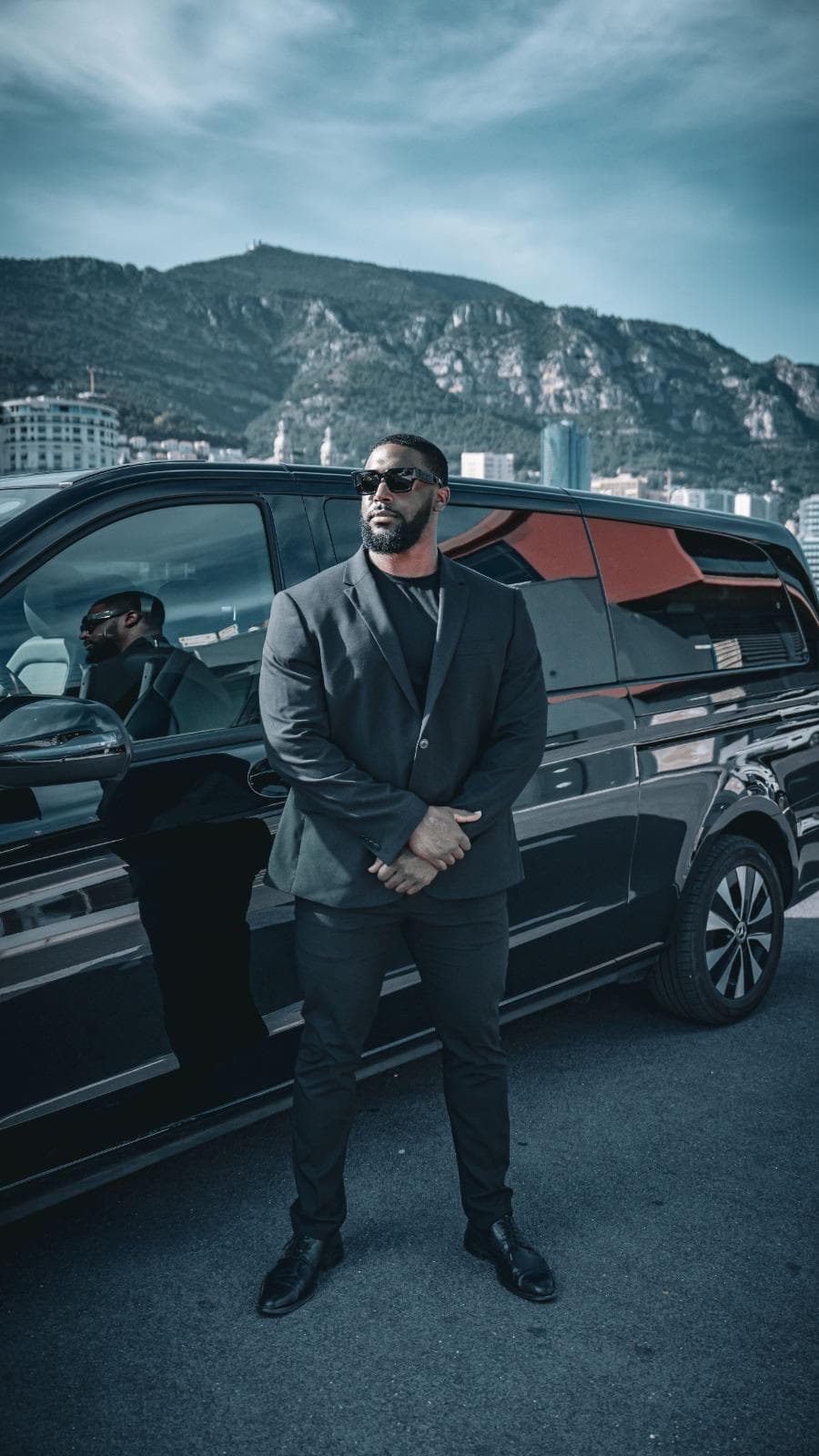
The visual profile of the driver is as important as the vehicle. A formally dressed chauffeur in a civilian vehicle creates an incongruity that attracts attention. FFGR's low-profile drivers operate in smart-casual civilian attire — appropriate to the environment and the activity profile — and adopt the behavioural norms of a regular driver rather than those of a formal chauffeur.
This includes how they wait, how they communicate by phone, and how they interact with hotel staff or venue personnel. A driver waiting in a hotel lobby who behaves exactly as a CPO would behave has failed the low-profile objective, regardless of what he is wearing. FFGR trains its low-profile drivers on the behavioural dimension of operational anonymity, not only the mechanical requirements.
Information Discipline in Low Profile Operations
Low-profile operations require stricter information discipline than standard high-visibility transfers. The smaller operational footprint means that each person who knows the principal's schedule represents a proportionally larger share of the total information exposure. FFGR's low-profile operations are planned on a strict need-to-know basis, with timing, routing, and vehicle details communicated only to the immediately involved personnel.
Booking confirmations for low-profile transfers are stripped of identifying information. The principal's name does not appear in driver briefing documents. Route details are provided verbally, not in written form. These information disciplines are not paranoia — they are operational norms for a service whose entire value proposition depends on the absence of a visible information trail.
When Low Profile Transfers Are Appropriate
Low-profile transport is appropriate when the primary risk is surveillance or information exposure rather than direct physical threat. This includes travel to sensitive business meetings, visits to legal or medical professionals, personal travel during periods of heightened media interest, and transfers in environments where a visible VIP vehicle would create predictable crowd or media attention.
It is not appropriate as a substitute for armed protection when there is a credible physical threat. FFGR's security advisors assess each request and recommend the appropriate operational profile. In some cases, the most secure arrangement is a combination of low-profile primary vehicle and a discreet follow car — providing physical security without visible VIP signature.